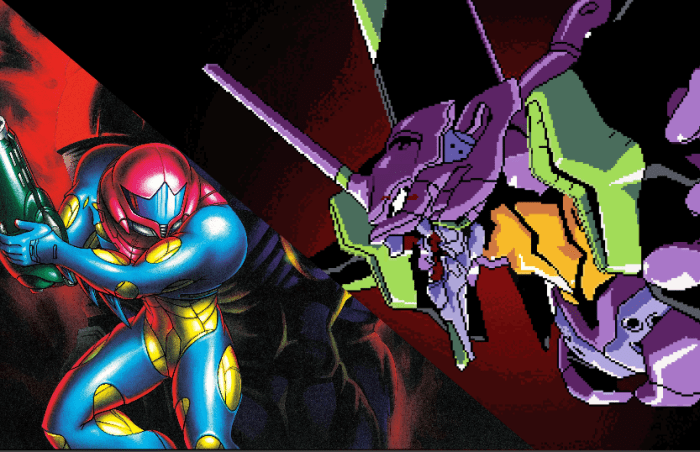
Screw Attacks, Third Impacts, and Other Interstellar Horrors

As a medium, video games are defined by different forms of touch. Both the interface between player and game and the action of most games itself relies upon a set of simple rules — what kinds of responses a particular touch will engender, and what groups of pixels can and cannot be safely touched. Games have their own language for these interactions: collision detection defines the act of in-game touch, and hitboxes measure where and when that touch brings pain. In most games, this becomes a kind of broad and neutral framework: a foundation on which mechanical and narrative structures can be built. But in Metroid, touch becomes its own singular kind of horror.
In Abandoning Perfection, Rain World Finds Nirvana

Rain World has a certain reputation in the gaming sphere: a hellishly difficult 2D platformer largely panned by critics at release, but that found a second life via a relatively small and deeply dedicated community of fans. I had tried to play it several times over the past few years, emboldened each time by various accomplishments in other "difficult" games — and each time I found myself unable to make it past the first few levels. This time, I broke through with the help and advice of some friends on the Waypoint forums, and behind that initial wall I found a piece of art that, especially in its "remixed" form, has more to say about that idea of video game difficulty than any other game I've played.

Disco Will Not Save the World Unless it Saves You First

At its core, Disco Elysium is a game about the "post-" in words like postcolonial, postrevolutionary, posthistorical, postmodern; it is about living in the nebulous after, in the shadow of a happening much larger than whatever small piece of the world we can identify ourselves. And so, its version of a new way forward becomes almost unrecogniable — like a creature blending with the reeds.