[This post contains full plot spoilers for Seasons 1-8 of Dexter and mild gameplay (but no story) spoilers for Disco Elysium.]
Something I’ve always enjoyed in my time writing critically on media are weird comparisons — taking two pieces of media that otherwise would never be placed alongside each other and seeing how hard I have to smash them together to generate something interesting. In that vein, I recently finished binging Dexter, and made a joke with a friend who also loves Disco Elysium about whether Dexter Morgan had access to Shivers. Then I thought about it a little too long… and this happened.
The rules I wrote this under were simple. No repeated signature skills, and only main cast members who were around for at least a few seasons (with some particularly compelling extras thrown in for fun). And, because I already mentioned it, I’ll say from the start that I didn’t give anyone Shivers. Aside from maybe Dexter himself, no one on this show ever demonstrates the capacity to think beyond their own preoccupations and motivations: to see the city as an organism, to stop and linger and feel the past and future blowing in on the ocean breeze. And while Dexter probably does have enough points in the skill to clear that Shivers check, there are better fits for his signature.
Now, with that out of the way, let’s dive in.
Brian Moser (also known as: The Ice Truck Killer)
Signature Skill: Suggestion
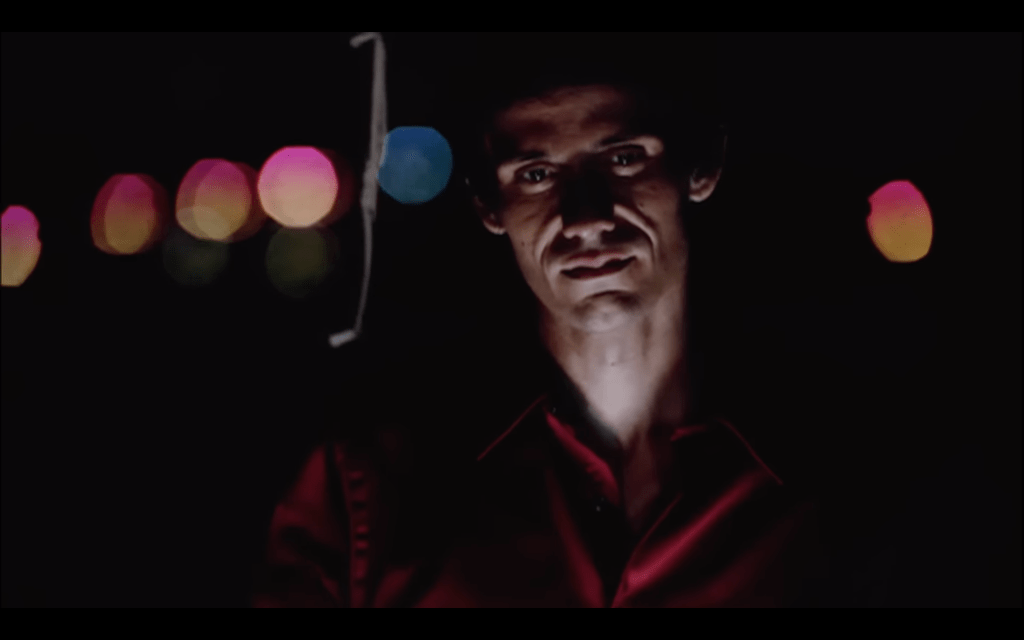
Though Dexter features a wide and varied cast of charismatic and manipulative killers, no one over its entire eight-season run comes particularly close to matching Brian Moser. The series’ first big villain is at once its most persuasive and seductive: luring vulnerable young women to be dismembered and staged like props, then seducing Dexter’s sister Debra in a (successful) attempt to get closer to his unknowingly estranged brother. The only person the Ice Truck Killer fails to fully captivate is Dexter himself — and even then, he comes far closer than anyone else, imprinting so deeply on his younger brother’s psyche that, years after his death, on a short-lived trip to Nebraska, Brian even manages to briefly charm Dex from beyond the grave.
Arthur Mitchell (also known as: The Trinity Killer)
Signature Skill: Authority
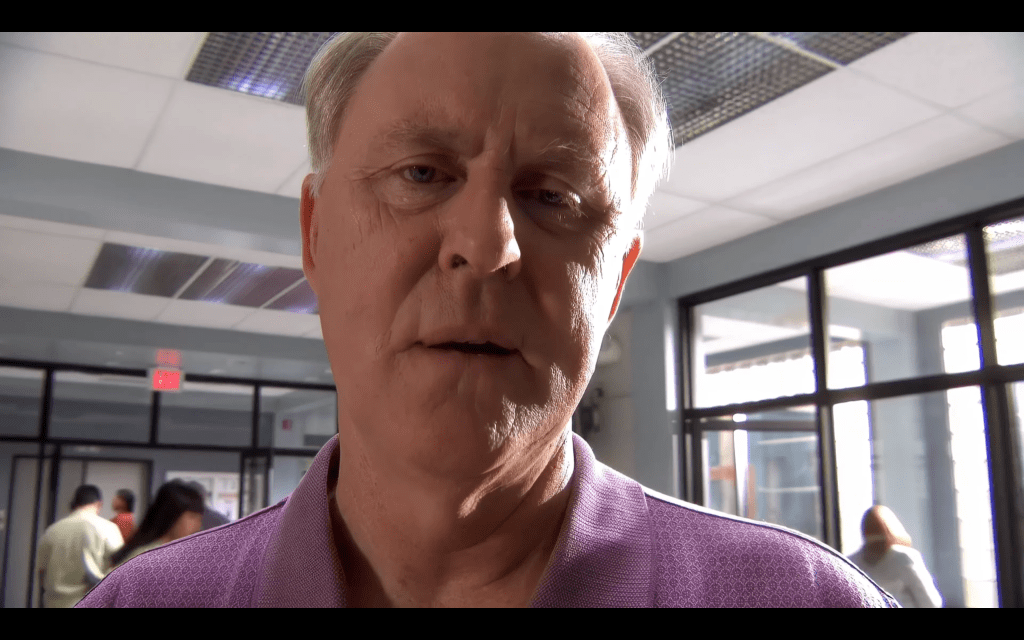
For all the unpredictability that John Lithgow’s performance lends the character of Arthur Mitchell, a man who recreates his own psychic death and the very real deaths of his family in the medium of others’ bodies, the Trinity Killer’s signature is as straightforward as it is simple. Trinity is imposing — a hulking figure that towers over Dexter in their first true confrontation, his expression a self-assured leer that carries both absolute confidence and simmering contempt. That scene might be the show’s most iconic: his, “Hello… Dexter Morgan,” dripping with a kind of malice that the series’ later antagonists tried and failed to replicate. And Trinity’s role, as Dexter’s ultimate foil, is that of an iron-fisted patriarch: a man who rules over his family through fear and intimidation, who breaks his son’s fingers in revenge for damaging his car and keeps his daughter under 24-hour surveillance, her door locked from the outside. He is kind to people who defer to him, and abuses everyone that doesn’t. Authority is Trinity’s signature, because Trinity’s only desire is control.
Frank Lundy
Signature Skill: Inland Empire
There are more straightforward options for Lundy: a character the show underutilized to an unforgivable degree, and easily my favorite recurring face of its entire run. Perception, Conceptualization, Logic, Composure: everything that makes the FBI’s premiere serial killer hunter a deductive force unlike anyone save Dexter himself. But Lundy’s reasoning abilities seem to go beyond a purely human knack for reading and reconceptualizing the world around him. The man sees patterns where others can’t, deduces motivations based on dreams and decades of honed instinct. He traces the impossible trail of the Trinity Killer’s ghost through decades of murder cases and suicides — and, when he bumps into him on the street, he seems to realize it simply by looking Arthur Mitchell in his eyes. “Eyes blue, something in them,” is the kind of observation Inland Empire makes. And the look in his own eyes when he sees death coming, of suspicion and foreboding come home to roost — Lundy sees reality as it is, façades dropped and guises lifted, the truth revealed in black and white. Or at least, in slightly less anomalous shades of grey.

Hannah McKay
Signature Skill: Composure
From her introduction near the start of Season 7 to the show’s close, Hannah straddles the line between season antagonist and love interest, engaging Dexter in a dance of attempted murder and wanton lust that oscillates between comical and insane. Her method of killing is twofold: an encyclopedic knowledge of poisons derived from the flowers in her garden, and the composure to engage and deliver them while leaving her targets none the wiser. And between the two, composure feels like the more meaningful signature. Throughout her run, Hannah never cracks — not when Dexter nearly murders her in an empty Christmas village (they fuck instead), not when he sends her to prison for the murder of a true crime writer, not when she returns under another name with a rich and abusive husband in tow, and not even when, having fled to Argentina with Dexter’s son Harrison, she learns about his death from the news. At all points, she remains simultaneously personable and stoic, identifying and weaponizing her targets’ weaknesses while refusing to reveal anything beyond her carefully built façade. As Dexter‘s later seasons devolve into the absurd realism of a soap opera, her composure becomes a foil to his own self-serious mask, matching wits until, like a surviving wall in a house destroyed by a hurricane, she’s the only one left standing.

Vince Masuka
Signature Skill: Encyclopedia
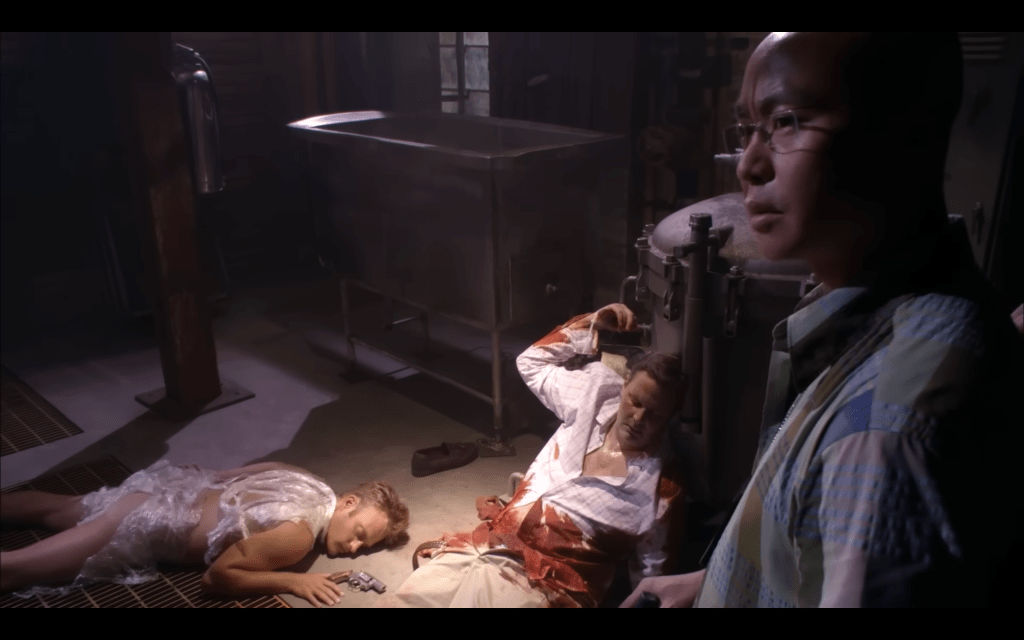
I will readily admit — this one feels like a bit of a cop-out. Nothing (or at least none of the character skills) in Disco Elysium lines up all that well with the guy whose main character trait is sexually harrassing his coworkers. But from a certain angle, encyclopedia does have a weird sort of congruity with Vince Masuka’s vibe. Beyond the way the show plays him for that particular 2000s-brand of comic relief (close enough, welcome back Tony DiNozzo), he’s an extremely competent forensic specialist whose knowledge of crime scenes and murder methods is exceeded only by his expertise on every form of sexual deviancy known to man. But encyclopedia promises breadth of knowledge, not utility — as the game says, “while it may give you crucial breakthroughs, it more often will clutter your mind with useless tidbits,” and little describes Masuka more accurately than a font of sometimes funny, but often pointless quips. His signature moment: spinning an elaborate tale of sex and murder for a pair of bodies that Dexter positioned specifically to trick him, screams of overinvestment in encyclopedia at the expense of empathy and perception. (It’s also, to be fair to him, an absolutely perfect payoff, and one of the best scenes in the show.)
Maria LaGuerta
Signature Skill: Rhetoric
LaGuerta is another tough character to triangulate for this exercise. But while Masuka is consistent to a fault, a one-note character who exists to serve a single purpose in Dexter‘s collective universe, LaGuerta is the opposite. Whenever the writers need to generate a pointless conflict for a season’s B plot (or, when they finally run out of ideas, an A plot), LaGuerta’s personality and goals shift to serve their needs. Choose a point in the show’s progression and map her relationships with each character, then fast-forward two seasons ahead and watch all of them flip. The writers treat her like a tool, and so, in every aspect of her life, she becomes a politician: secure in her own righteousness no matter the goal and willing to carry out whatever sting or lay whatever trap she needs to catch the enemy of the moment. And in those fights, rhetoric — as words, as persuasion, as bureaucratic politics — becomes her main weapon: shattering others’ arguments, winning on technicalities, and working through her superiors’ and subordinates’ lies. Even if, in the end, she finally takes on an opponent she can’t politik her way past.

Rita Morgan (née Bennett)
Signature Skill: Volition
When the show first introduces Rita Bennett, Dexter’s then-girlfriend and eventual wife, the camera and lighting combine to give her a near-angelic glow. She is the moral center of the show’s first four seasons, and the only character in the entirety of Dexter who understands how to work through her traumas without lashing out at everyone else around her. Deeply caring and understanding to a fault, tolerant and compromising even when she almost certainly shouldn’t be, Rita so obviously doesn’t belong on this island of misfit toys that her presence becomes not just a foil to Dexter — who, by the end, really does seem to care for her and their life together — but for the entire cast. And in Disco Elysium‘s terms, she is volition personified: with near-unshakable morale, grounded and profoundly stable, able to resist nearly every vice and temptation thrown at her through sheer willpower and commitment to herself and the things she cares about. I don’t think it’s a coincidence that the show’s decline from vibey, campy fun to drowning in its own self-serious moralizing began with her death — like volition, Rita was the beating heart of the show’s otherwise dysfunctional cast, her consistency and resolve keeping everyone else grounded and sane.

Joey Quinn
Signature Skill: Electrochemistry
Joey Quinn is many things: a mercurial hothead, an utterly hopeless romantic, and, by the end of the show, a heavily traumatized man hiding his pain beneath some very high cheekbones and a stoic scowl. But above all else, Joey Quinn is a Superstar Cop. He may not always be the life of the party, but he sure believes he is — and in electrochemistry’s realm, that’s all that matters. He may not have committed the wild drug use that largely defines the skill in Disco Elysium, but no one in Dexter‘s expansive cast responds quite as instinctively, rashly, and doggedly to the firing of their synapses and the flow of their neurotransmitters as Quinn. After all, this is the man who watched his girlfriend shoot herself before his eyes, rebounded by dating his partner, rebounded from her rejection by falling in love with an undocumented stripper, and rebounded from that (a tryst that involved him murdering her pimp in cold blood) by dating his own boss’s sister: a woman who, in the end, was far too well-adjusted and attracted to him for him to handle. Quinn is a slave to his impulses and the reward matrix of his brain, and by the end, even he seems to know it.
And somewhere in that mess, in the midst of a season-spanning bender, Sergeant Batista helps him find his gun.

Angel Batista
Signature Skill: LA PASSION Empathy
At first glance, this might seem like an odd choice for a character who once said, “don’t go down that emotional road; just go down on her.” But empathy isn’t always conscious — in its purest form, it’s the uncontrollable magnetism of others’ feelings, the desire to seek justice as a means of salving pain. And no one in Miami Metro is quite as compulsively responsive to the feelings of everyone around them as Angel Batista: a man who once assaulted another cop to defend his wife’s honor, who helped his partner through a manic bender that probably should have ended his time on the force, and who, whenever one of the people he cares about is wronged, is the first to take their feelings out on the guilty party.

James Doakes
Signature Skill: Drama
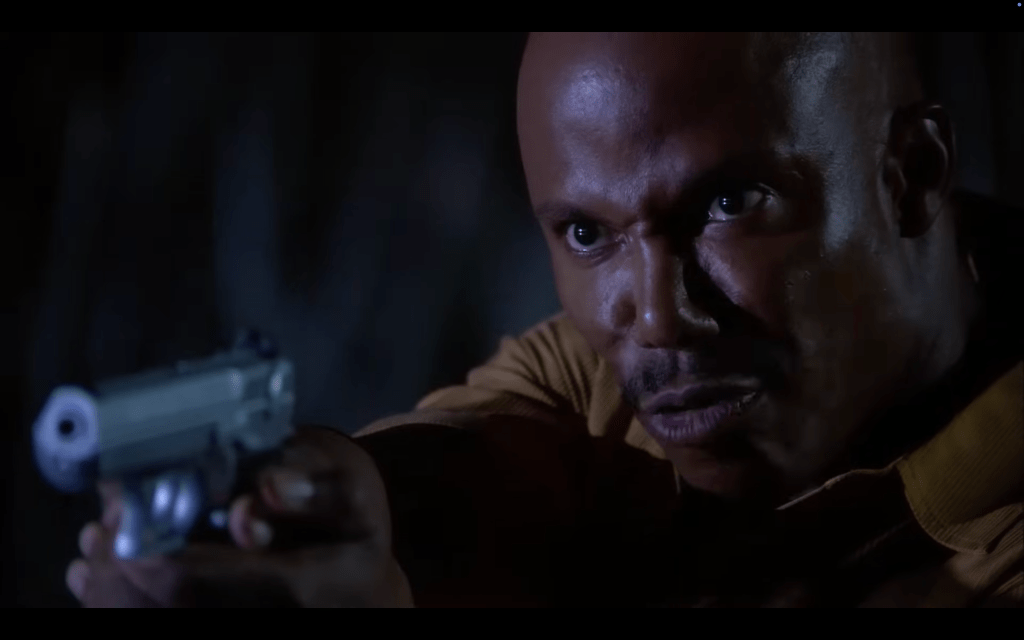
Every one of Dexter’s antagonists exists, in some way, as a foil to Dexter’s own persona and skills. And despite not fitting with most of the show’s serial killer villains, Doakes is no different. Trinity reflects Dexter’s authority; Brian Moser reflects his powers of suggestion. Miguel Prado matches him with rhetoric, and Travis Marshall is a pale imitation of Dexter’s half-light. And Doakes — Doakes reflects Dexter’s drama, his ability to lie and his ability to see through others’ lies. In a show filled with gullible marks, he’s the only one who sees personality as performance, and who treats every moment as if an audience is watching, and who pegs Dexter as a fellow performer from the jump. And let’s face it: only someone with drama as their signature could pull off that, “surprise motherfucker” the way he does — even if, in the end, he gets dragged off-stage all too soon.
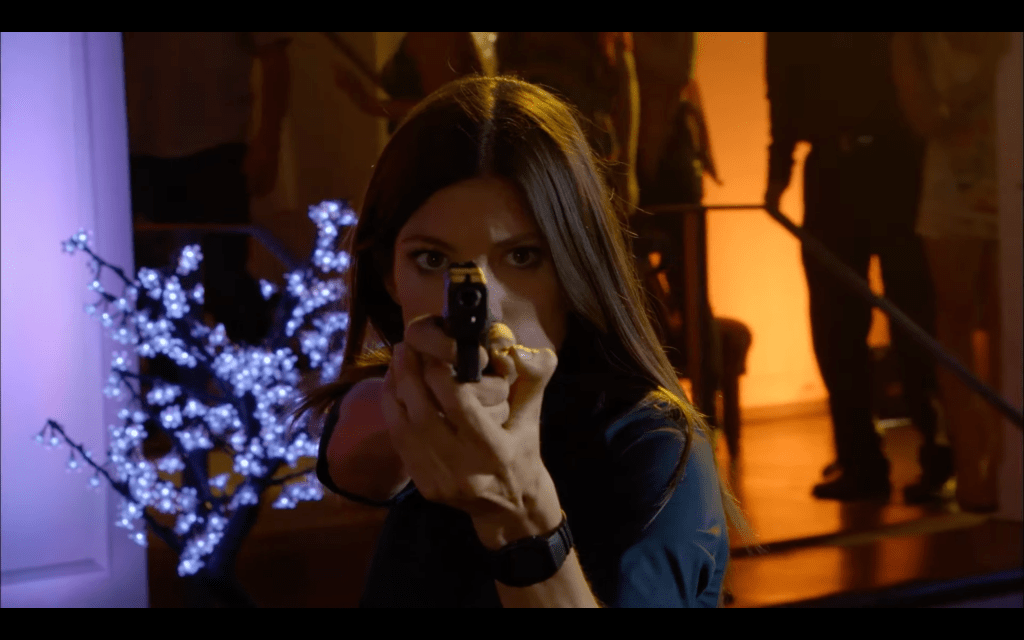
Debra Morgan
Signature Skill: Pain Threshold
Even for a show filled with repeated and vicious carnage, no one experiences more, and pushes through more, than Debra Morgan. Over the course of the series’ eight seasons, Deb survives the attention (and affections) of multiple serial killers. She’s torn open by stab wounds and bullets, only to be stitched back together so that she can do it again. She’s gunned down alongside the love of her life and watches him die on the concrete, then later deduces the identity of his killer from the trajectory of her own bullet scars. She takes constant abuse from authority figures — particularly LaGuerta in later seasons — and yet, at every point, she pushes through every barrier they place before her. Even when the series is at its most contrived: her descent into self-doubt after learning Dexter’s secret, Hannah poisoning her with her own meds, and her Season 8 bender as a bounty hunter, her single unifying characteristic is her ability to tolerate and overcome incalculable amounts of pain. From Disco‘s description: “Pain Threshold ignores damage so you can push on, bloodied and crawling, to the bitterest end. It enables you to negate damage you would otherwise take. Even mental pain — heartache and loneliness. In fact, these things can become a thrill you seek out and perversely revel in.”
I don’t think you can write a better description of Deb Morgan than that.
Dexter Morgan (also known as: The Bay Harbor Butcher)
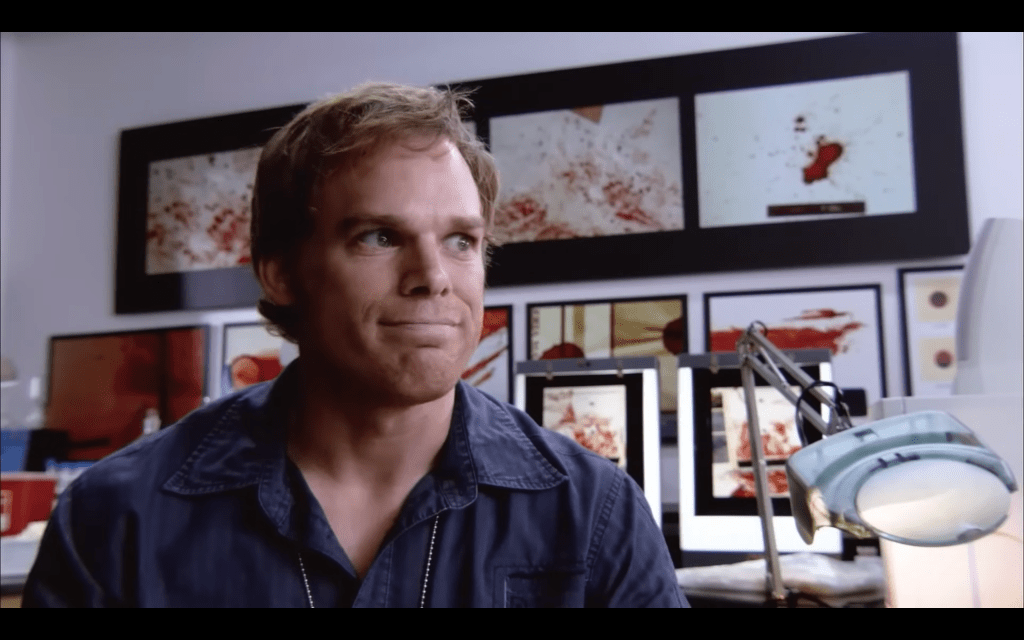
And finally, that brings us to the man himself. Dexter Morgan. The Bay Harbor Butcher (y’know, he really hates that name). In all honesty, it’s hard to find a better subject for this exercise than Dexter — nearly every skill in Disco Elysium applies to him in some way, shape or form. His ability to transform a room into a spiderweb of plastic sheeting and escape without a trace screams of high interfacing and savoir faire, and his ability to take down a wide range of combatants in physical combat speaks to his physical instrument and reaction speed. He attempts authority and often succeeds; his powers of suggestion are strong enough to lead double and, at points, even triple lives with relative ease. His hunches and revelations rival Lundy’s command of Inland Empire. And his capacity for drama rivals Doakes’s — rarely tricked, and almost never fooled, while fooling others nearly without fail over his entire run. But those are easy, and somewhat superficial. We can go deeper. And just this once, I’m going to rank his top three.
Tertiary Skill: Esprit de Corps
Little is more consistent throughout the show’s eight-season run than Dexter’s reminders to everyone around him that he’s not a cop — just a forensics nerd, a spatter analyst, “the blood guy,” to put it simply. But no one in this cast, including its many officers, detectives, sergeants, and beyond, understands cops better than he does. After all, the first tenet of the Code is “don’t get caught,” and the ghost of his cop father talking him through every single scenario is about as close to a literal Esprit de Corps as it can get. But even beyond the presence of Harry Morgan in Dexter’s head, and even beyond his unparalleled ability to manipulate the behavior of the cops around him, Dexter’s innate understanding of the cops appears most clearly during the hunt for the Bay Harbor Butcher — in his manifesto. As Frank Lundy puts it: “he knows how we work. Look how he hits every major theme: political, environmental, religious… it’s scattershot. He knew that this would send us scurrying like squirrels for nuts.” Dexter may not be a cop, but no one understands cops like he does.

Secondary Skill: Visual Calculus
Buttressing Dexter’s virtually telepathic and near-precognitive understanding of the minds of the cops around him is his comprehension of and sheer mastery over the trajectory of nature and physics. It’s given a bit more (relative) realism in the early seasons — his crime scene dioramas with lots of little red strings assisting his analyses of spatter patterns and their causes — but as the show progresses, Dexter’s ability to dissect a crime scene and rebuild an exact sequence of events becomes the stuff of Batman comics and video games. When Mike Johnson begins his all-too-brief run in Season 6, his introduction to Dexter is a near-instantaneous deduction of a murder-suicide gleaned from the position of a pair of bodies and their respective bullet wounds. He even predicts where they’ll find the gun. Of course, this skill doesn’t just manifest in his police work — Dexter’s visual caluclus plays into nearly every killer he hunts: his analysis of their crime scenes, triangulating their movements and paths back to where they came from, and predicting where they might go next. This one might be obvious, but that doesn’t make its inclusion wrong. Even if there’s another skill that I think is, even still, just a little more important to his psyche.
Signature Skill: Half-Light
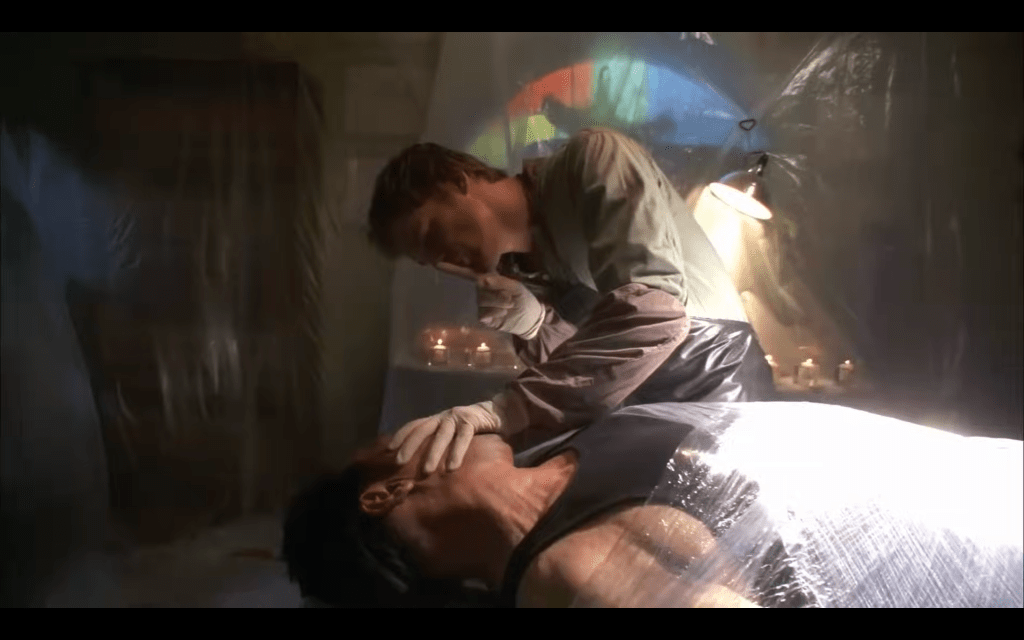
Despite all the show’s marketing and coverage to the effect, Dexter Morgan as-written is not, and never was, a psychopath. Over the course of those eight seasons, he’s revealed to be a deeply traumatized man: a boy “born” in a sea of his mother’s blood and trained by a series of scared or self-interested parental figures to channel that trauma into vigilante murder. He responded to a formative moment of fear by attempting to control it — and he does, mastering fear so well that in turn he masters himself. In Disco Elysium, half-light is described as: “mak[ing] you ultra-attuned to the world. It is perpetual fear – of your own shadow, of someone else’s name or scent. You’ll be ready, always, to pounce and physically interrogate passersby.” Dexter Morgan is fear incarnate: both driven by it and an inescapable cause of it. He is utterly unkillable — something the later seasons take to a near-comical degree — yet, at the same time, he lingers constantly in the shadow of his own capture, of the people he cares about learning his secret, and of the killers he hunts hurting his family and friends. In the rare moments where he’s bested: when Trinity finds his true identity, when Doakes tracks him to his boat, when Debra comes across him murdering Travis Marshall, his fear animates his reaction, driving him into a kind of primal, unthinking aggression, activating fight-or-flight response that leaves his signature skill absolutely clear. Dexter Morgan is aggression born from fear: a character who perceives the world around him with the clarity of perfect terror, and who marshalls every other skill and weapon he has to never have to feel like that again. His half-light is off the charts, and he uses it to keep everyone he hunts forever in the dark.

 Sunset Over Ithaca