Something I've always enjoyed in my time writing critically on media are weird comparisons — taking two pieces of media that otherwise would never be placed alongside each other and seeing how hard I have to smash them together to generate something interesting. In that vein, I recently finished binging Dexter, and made a joke with a friend who also loves Disco Elysium about whether Dexter Morgan had access to Shivers. Then I thought about it a little too long... and this happened.
Category: Television
Everything Everywhere All At Once vs. the Decade of Cynical Art
As we all slowly drift away from the media landscape of the 2010s, I've found myself obsessed with what might be its most unwavering aesthetic pillar. From the Marvel Universe's cinematic sprawl, to our final great shared cultural object in the form of Game of Thrones, to the explosion of reality TV, to a set of Best Picture winners that includes films like Argo, Spotlight, and Birdman — our last decade of popular culture was defined by a specific and enduring strain of cynicism. Film and television, particularly American film and television, particularly American film and television that might be seen by anyone outside of tiny arthouse theaters or tight-packed city centers, had to guard itself against the charge of taking itself too seriously. This was the decade that American film and television became afraid of its own potential, and I think a lot of people never want to leave that comfort zone behind.
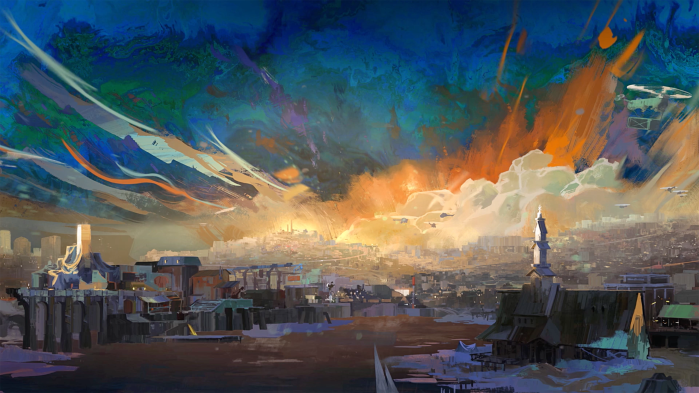
Disco Will Not Save the World Unless it Saves You First
At its core, Disco Elysium is a game about the "post-" in words like postcolonial, postrevolutionary, posthistorical, postmodern; it is about living in the nebulous after, in the shadow of a happening much larger than whatever small piece of the world we can identify ourselves. And so, its version of a new way forward becomes almost unrecogniable — like a creature blending with the reeds.
Death Stranding, Animal Crossing, and the Fantasy of Honest Work | GOTY 2020
Both Death Stranding and Animal Crossing imagine a kind of ending. The former: a more traditional vision of apocalypse, with a fractured society on a track to extinction. The latter: a more abstract ending — an end of needs and wants, replaced with something that one might be able to call "honest" work.
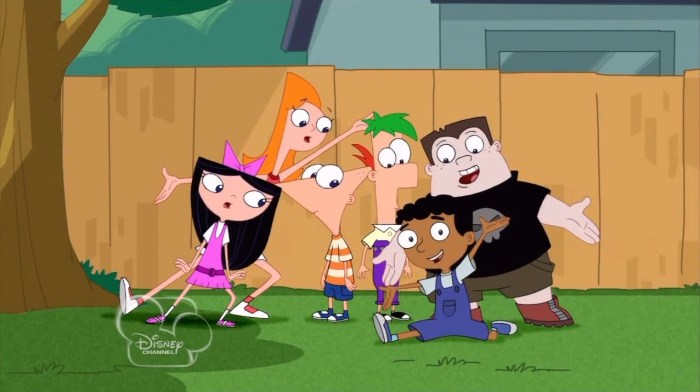
Moooommmm!!: A Feminist Reading of Phineas and Ferb
Ah, Phineas and Ferb, legendary chronicle of the immortal adventures of Phineas Flynn and Ferb Fletcher, it may have only been a year or so since you were yanked from the airwaves, but it feels like so much longer. Now that those halcyon days of eternal summer have passed into the rearview, I find myself longing for your exuberant … Continue reading Moooommmm!!: A Feminist Reading of Phineas and Ferb
A Tribute, to the Redemptive Science-Fiction of Person of Interest
There's a lot of advice floating around for would-be writers, ranging from the omnipresent (read always, write always) to the niche (write at this time of day, always write this many words per day, etc.), but the two best pieces I've ever received both dealt with what is probably the hardest of all moments to … Continue reading A Tribute, to the Redemptive Science-Fiction of Person of Interest
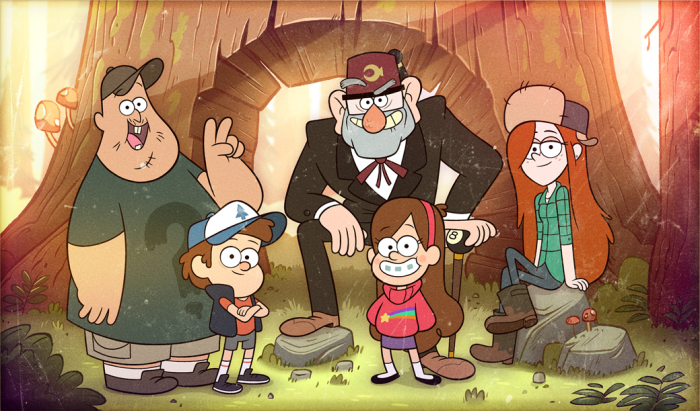
A Tribute, to the Wild, Wonderful Weirdness of Gravity Falls
I'm not a fan of binge-watching. In my mind, television, like every serialized medium, is best when experienced week-by-week—the anticipation building with every cliffhanger and every inexorable countdown to the next episode, all that tension to be released in one euphoric rush before the cycle begins again. In comparison, blasting through a season in one dazed weekend … Continue reading A Tribute, to the Wild, Wonderful Weirdness of Gravity Falls