And after hours and hours of moving those bodies around these chessboard grids, leveling mountains and razing forests with powers of the kind usually attributed to gods, the game's subtext begins to emerge. For all its smoke and flames, Into the Breach isn't really a game about cataclysm itself — it's about what led us there, and the increasingly invasive, disastrous measures needed to prevent a final slide into extinction.
Tag: video games
Death Stranding, Animal Crossing, and the Fantasy of Honest Work | GOTY 2020
Both Death Stranding and Animal Crossing imagine a kind of ending. The former: a more traditional vision of apocalypse, with a fractured society on a track to extinction. The latter: a more abstract ending — an end of needs and wants, replaced with something that one might be able to call "honest" work.
Deus Ex Ages into the Future It Imagined | GOTY 2020
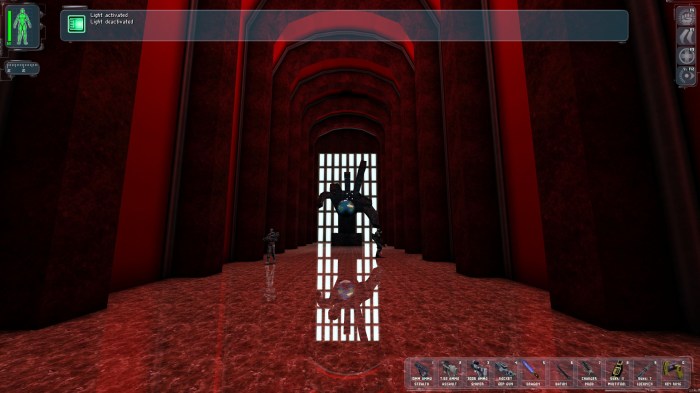
For all its complexity, summing up Deus Ex in a single word is simple: conspiracies. The game's plot features a series of nested conspiracies, all run through one central, iconic switchboard: the Illuminati. By way of government organizations and private industry, the Illuminati pulls the world's strings from the shadows, directing the future by influencing the present. And the present — of 2052 and, as it turns out, 2020 — features a deadly respiratory virus sowing fear and death across the globe.
You Might Have Missed: The Get Out Kids
It all feels like The Get Out Kids intended itself to be a fairy tale. Or at least, it mashes a fairy tale ending onto the skeleton of Pennywise the Dancing Clown, without ever quite checking to make sure the two had fit together. It at once wants to be a grim, spooky horror story, a lonely fable about a pair of outcast kids, and a fairy tale about found family. But—in the same way it never quite commits to a clear point-of-view for its player—it never quite ends up being any of those things either.
In Outer Wilds, They Blew Up the Sun, and There Was Nothing We Could Do
Outer Wilds is infused with a lingering tinge of melancholy, coupled with an overwhelming sense of smallness... All of these systems operate like clockwork, unfazed by your minuscule intrusions. In much the same way the Sun will never respond to your pleas. As you uncover the story of the Nomai, you learn—through implication and observation, through long-forgotten writings and the broken remains of their stations—that because of a lack of foresight and one too many human mistakes, there is no way to stop the progress they tried and, in their time, seemingly failed to set in motion. Millions of years later, their machines blew up your sun. And there's nothing you can do to stop it.
On the Creeping Horror of Salt and Sanctuary, and its Island of Twisted Reflections
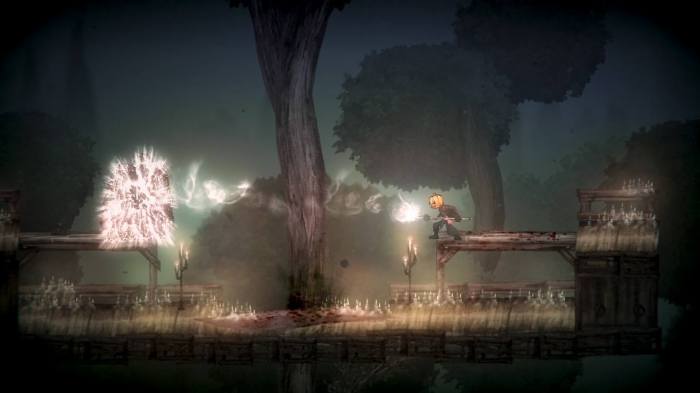
In doing so, Salt & Sanctuary builds one of the most rewarding final acts I've experienced in a video game, that translates an atmosphere of mounting dread into a sequence of sudden, heightened horror, and then, in its final moments, a rush of catharsis.
On Dark Souls II: Ephemera, Entropy, and the Inevitability of Loss
The ragged white knights in Heide's Tower of Flame don't even rise when you first enter the area; they wait for you to slay the area's first boss before even bothering to stand. The soldiers in Drangleic Castle begin as statues, shaking themselves to life as if awaking from a thousand-year slumber. They still fight, but everything seems tired. Exhausted, even. Like they don't even know what they're fighting for.
This is fitting, because it elucidates Dark Souls II's core thesis. At its heart, this is a game about loss.
Six Years before Breath of the Wild, Dark Souls Reinvented The Legend of Zelda
But the bond between Dark Souls and Ocarina of Time runs far deeper than their initial obtuseness—to a point where the first Soulborne game feels like a crystallization of the first 3D Zelda’s design ethos. Both present the player with complex, interlocking worlds; spaces that revel in a secret, paradoxical linearity that curves and bends and doubles back on itself, that focuses on shortcuts and secret paths to optimize the player’s path forward. In Ocarina, those are its dungeons; in Dark Souls, that’s the design philosophy behind the entire world.
The ’18 Best Games of 2018: Part II
Perhaps that title is a bit paradoxical, since this is, by definition, no longer a list of the best games of 2018. But I'm of the opinion that recency bias has a bit too much leverage in our blink-and-you'll-miss-it world, so let's start 2019 right by rolling that back juuuust a bit.
The ’18 Best Games of 2018: Part I
If that title sounds like a lot, don't worry—this is a two-part list, and if you're pressed for time, either half should be an enjoyable respite from the apocalyptic rain of acid and flames that, if anything, should bring 2018 to a close. In the grand tradition of Mario Kart's Nitro and Retro halves (well, since Mario Kart DS at least), I'll be listing the best games I've played this year in two halves—first, games released in 2018; second, games released elsewhere (well, mainly in the past) that I first played this year. And maybe the sum of the two will be a bit long, but hey, there's a really awful pun near the end of this one (can you spot it?), and you can go grab some popcorn at the intermission.