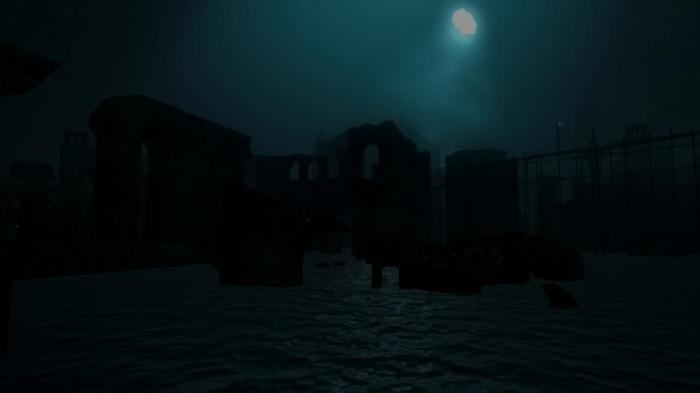
The ragged white knights in Heide's Tower of Flame don't even rise when you first enter the area; they wait for you to slay the area's first boss before even bothering to stand. The soldiers in Drangleic Castle begin as statues, shaking themselves to life as if awaking from a thousand-year slumber. They still fight, but everything seems tired. Exhausted, even. Like they don't even know what they're fighting for. This is fitting, because it elucidates Dark Souls II's core thesis. At its heart, this is a game about loss.
Tag: worldbuilding
Six Years before Breath of the Wild, Dark Souls Reinvented The Legend of Zelda
But the bond between Dark Souls and Ocarina of Time runs far deeper than their initial obtuseness—to a point where the first Soulborne game feels like a crystallization of the first 3D Zelda’s design ethos. Both present the player with complex, interlocking worlds; spaces that revel in a secret, paradoxical linearity that curves and bends and doubles back on itself, that focuses on shortcuts and secret paths to optimize the player’s path forward. In Ocarina, those are its dungeons; in Dark Souls, that’s the design philosophy behind the entire world.