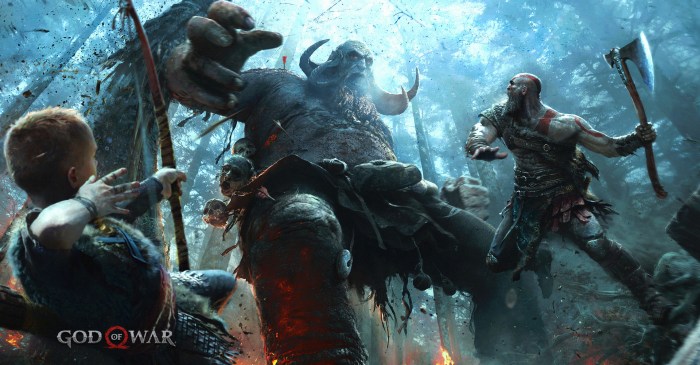
But in the aftermath of that feeling, I realized something else—that the euphoria I'd felt in the wake of that fight came alongside the dropping of the game's initial facade. Kratos is not redeemable. He is a monster, and those blades represent that. Only a monster can wield them as he does. Only a monster can descend into Helheim and fight his way back out. Only a monster can harness that fiery maelstrom to survive those hordes of ice.
Tag: writing
You Might Have Missed: Night in the Woods
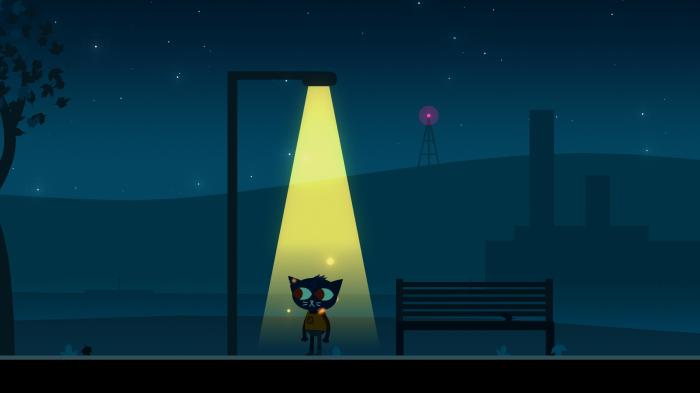
About an hour into Night in the Woods, a modern adventure game from a small team called Infinite Fall, Mae Borowski reuintes with her high school bandmates for practice. Since she'd left for college, their drummer—Casey—had disappeared, and their guitarist and singer, Gregg and Angus, had recruited another old classmate named Bea to take both … Continue reading You Might Have Missed: Night in the Woods
Dream No More: How Hollow Knight’s Story Mirrors the Myth of Prometheus
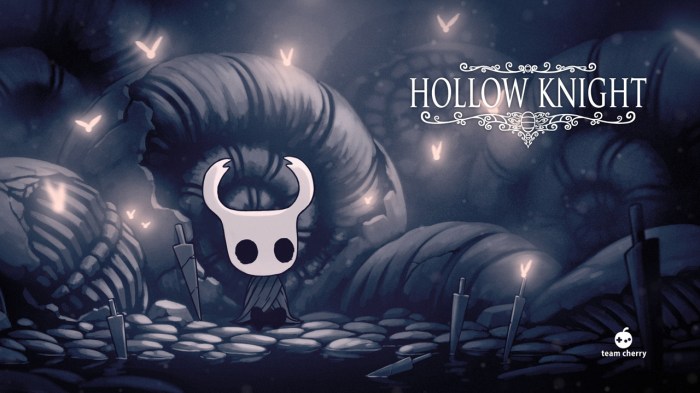
Hollow Knight expands from the journeys of a wanderer through a vast, decaying kingdom—beginning with a simple descent into the Forgotten Crossroads and ending with something much like deicide. And in between, a retelling of the Prometheus myth takes shape—the story of a clever, ancient being usurping its creator and granting its subjects a new form of enlightenment.
You Might Have Missed: Hollow Knight
My favorite moment in Hollow Knight came about a quarter of the way through my forty hour playthrough, when I descended through the Fungal Wastes and found myself in a giant pit at the center of a hidden village. Three mantises—for Hollow Knight's kingdom of Hallownest is a land of insects and bugs—sat on tall wooden … Continue reading You Might Have Missed: Hollow Knight
You Might Have Missed: Rune Factory 2
A game’s qualifications for this loosely-defined series of mine usually begin and end with my belief that not enough people have played it. And while Rune Factory 2 is far from an indie game, I doubt the cross-section of audiences that enjoy both intensive dungeon crawling and Harvest Moon-style farming-and-relationship simulators is all that large. … Continue reading You Might Have Missed: Rune Factory 2
SOMA, Prey, and What it Means to Be Human
It was an fortunate coincidence that I ended up playing Prey and SOMA at virtually the same time. It wasn't even back to back—I played them more or less alongside each other, and finished each (the first a ~25 hour immersive sim in the mold of System Shock 2, the second a 9 hour, linear survival-horror venture at the … Continue reading SOMA, Prey, and What it Means to Be Human
A Reading: The Shared Trauma of Life is Strange and Ocarina of Time
Each episode of Dontnod Entertainment's Life is Strange begins with a disclaimer—that you, the player, are about to make choices that will affect the characters' past, present, and future. And while the latter two seem like common sense in a branching path game, the first made me wonder. Was I about to see that storied … Continue reading A Reading: The Shared Trauma of Life is Strange and Ocarina of Time
Bastion: Thermodynamics, Entropy, and the Physics of Fantasy
Now, where Bastion really comes in is in the second half of that law: the isolated system. If a process is kept in a vacuum, entirely alone, its entropy will only ever increase. However, we can decrease entropy locally by various methods—mainly by bringing in other sources from outside that system (like eating food, which our bodies then convert into other forms of energy). If you've played Bastion, you might now realize where I'm going.
Your Name: A Film on Reality, Seen through Fantasy
Your Name (Japanese title: Kimi no Na wa) is one of those rare pieces of art that defies genre classification—that breaks every assumption and expectation of science-fiction, fantasy, and coming-of-age narratives, and that takes our reductionist approach to film and fiction and shows that nice, convenient labels are never necessary in creating powerful works. It simultaneously melds body-swapping and time … Continue reading Your Name: A Film on Reality, Seen through Fantasy
An Exploration of The Legend of Zelda: Breath of the Wild, Part V: The Heroes’ Legacy
So Breath of the Wild is the apex of open-world design. It's filled with secrets, and it makes exploration itself feel rewarding. Its narrative has depth and resonance, and its characters feel three-dimensional and relatably real. It takes the tropes of post-apocalyptic fiction to a new level—depicting a world not irradiated and destroyed, but retaken by wilderness. And in … Continue reading An Exploration of The Legend of Zelda: Breath of the Wild, Part V: The Heroes’ Legacy